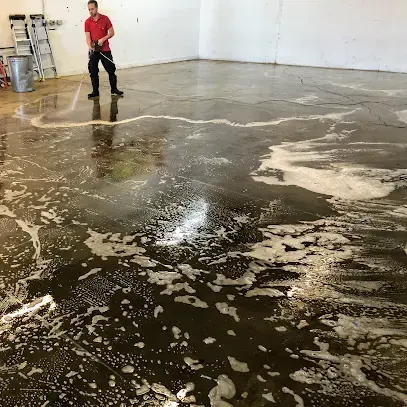
The name Fountain Valley refers to the very high water table and the many artesian wells in the area when the name was chosen. The land was swamp and peat before it was farmland, and water has always been part of its story.
Key takeaways
- The city is named for a very high water table and artesian wells, and early settlers dug drainage canals to make the land usable for farming.
- Standing water from a leak or a storm should be extracted quickly and the structure dried completely.
- Large housing tracts went up in the 1960s on former farmland, so many homes are decades old.
- Orange County Public Works calls the Santa Ana River the major flooding threat in the county, and it forms the eastern border of Fountain Valley.
- Drying is finished only when meter readings return to normal, not when surfaces look dry.
A city named for water
Fountain Valley borders Huntington Beach, Westminster, Garden Grove, Santa Ana and Costa Mesa. The Santa Ana River forms its eastern border.
The name points to a very high water table and many artesian wells at the time it was chosen. That history explains a lot about the ground and the way the area was developed.
The City of Fountain Valley Water Division supplies the community. About 75 percent of the city's water is local groundwater from the Orange County Groundwater Basin, and about 25 percent is imported from the Metropolitan Water District of Southern California.
Peat, swamp and drainage canals
The Talbert family bought more than 300 acres of peat and swampland around 1896 and opened a general store, which started the settlement of Talbert.
Early settlers dug drainage canals to make the land usable for farming, and agriculture stayed the main land use until the 1960s.
From farmland to housing tracts
Large housing tracts accelerated in the 1960s as farmland was developed. Green Valley, a master planned area of 1970s tracts with greenbelts kept up by associations, came later.
Many Fountain Valley homes are therefore decades old, and older plumbing, roofs and appliances are common sources of leaks.
The 2010 Census counted 19,164 housing units, 72.2 percent owner occupied and 27.8 percent renter occupied. A leak in a family home is usually the owner's to handle, while a leak in a rented unit starts with a call to the landlord.
Why standing water should not be left
No claim is made here that any particular home sits on a wet lot. The point is simpler.
Water from a leak, an overflow or a storm that stays in a building can soak into materials, and a city with this history has good reason to take drying seriously.
Water left in carpet, pad, baseboards and wall bottoms keeps spreading, and a damp structure is where a small leak becomes a much bigger repair.
The safest approach is the same in every home. Remove the water, find where it went and check the materials with a meter until they are dry.
- Standing water soaks into drywall and trim from the bottom up.
- Wet carpet pad holds moisture against the floor for a long time.
- Wall cavities stay damp long after the room looks dry.
- Wet materials left in place can start to grow mold, which is why a day or two is the usual limit for starting to dry.
How extraction works
The first step is pulling the water out. Water extraction uses pumps and extraction tools to lift standing water off hard floors and out of carpet and pad.
This is quicker and more thorough than towels or a wet vacuum, and it reduces how much water the drying equipment has to handle.
A wet vacuum can pull water off a small spill. A real flood or leak needs more power, because carpet and pad hold far more water than they appear to, and the pad under carpet is usually removed when it is soaked.
What gets checked right after
After the water is gone, moisture meters check walls, floors and framing. Wet spots that look dry on the surface show up on the meter.
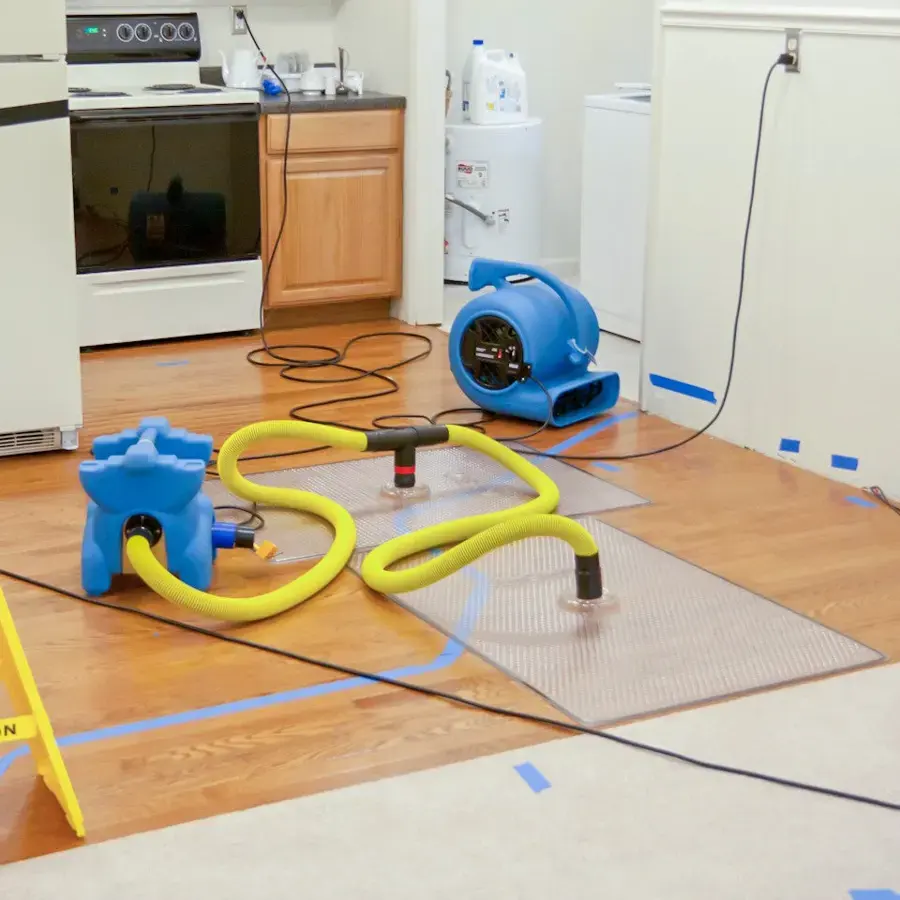
Drying until the readings say so
With the standing water gone, the structure is dried. Air movers push dry air across floors and wall bottoms, while dehumidifiers pull moisture out of the air.
Structural drying is monitored with daily readings, and the equipment stays until every checked material reaches a dry reading.
Because moisture can hide, the drying plan accounts for more than the visible wet spot. Baseboards, wall bottoms and the edge of flooring are checked even when they look fine.
This is the reason a completed job comes with readings. They are the proof that the structure is dry, not just the room.
- Readings are taken at the start so there is a baseline.
- Equipment is adjusted as some areas dry faster than others.
- Drying is complete only when every checked material is at its dry reading.
River, channel and drainage in Fountain Valley
Orange County Public Works calls the Santa Ana River the major flooding threat in the county. The Fountain Valley Channel drains toward the Pacific Ocean at Huntington Beach.
The city offers sandbags during the rainy season and maintains local sewer and storm drain pipes, lift stations and catch basins.
A note on what to do after a leak
The steps are the same for a leak, an overflow or a storm. Stop the source, photograph the damage and get the standing water out.
The Fountain Valley page lists the services for the city, from extraction to commercial water damage.
If a pipe, an appliance or a storm sends water into a Fountain Valley home, the first hours are about stopping the source and calling for help instead of waiting to see if it dries. The earlier the standing water is pulled out, the less material has to be removed.
Questions
Why is it called Fountain Valley?
The name refers to the very high water table and the many artesian wells in the area when the name was chosen.
Does that mean every Fountain Valley home has wet ground?
No. That cannot be said for any particular home. The history is the reason for taking standing water seriously.
Why is complete drying important?
Moisture left in drywall, pad and framing keeps spreading and can lead to a larger repair, including mold.
What forms the eastern border of Fountain Valley?
The Santa Ana River. Orange County Public Works calls it the major flooding threat in the county.
How do crews know when drying is done?
Meter readings in each material are compared with a dry reference, and the equipment stays until they match.
Where does Fountain Valley get its water?
About 75 percent is local groundwater from the Orange County Groundwater Basin and about 25 percent is imported from the Metropolitan Water District of Southern California.