Structural Drying and Dehumidification in Newport Beach, CA
Surface dry is not structurally dry. The drying team sizes air movers and dehumidifiers to each room and runs them until framing, floors and concrete read dry, 24/7.
(888) 450-9281Start the structural drying now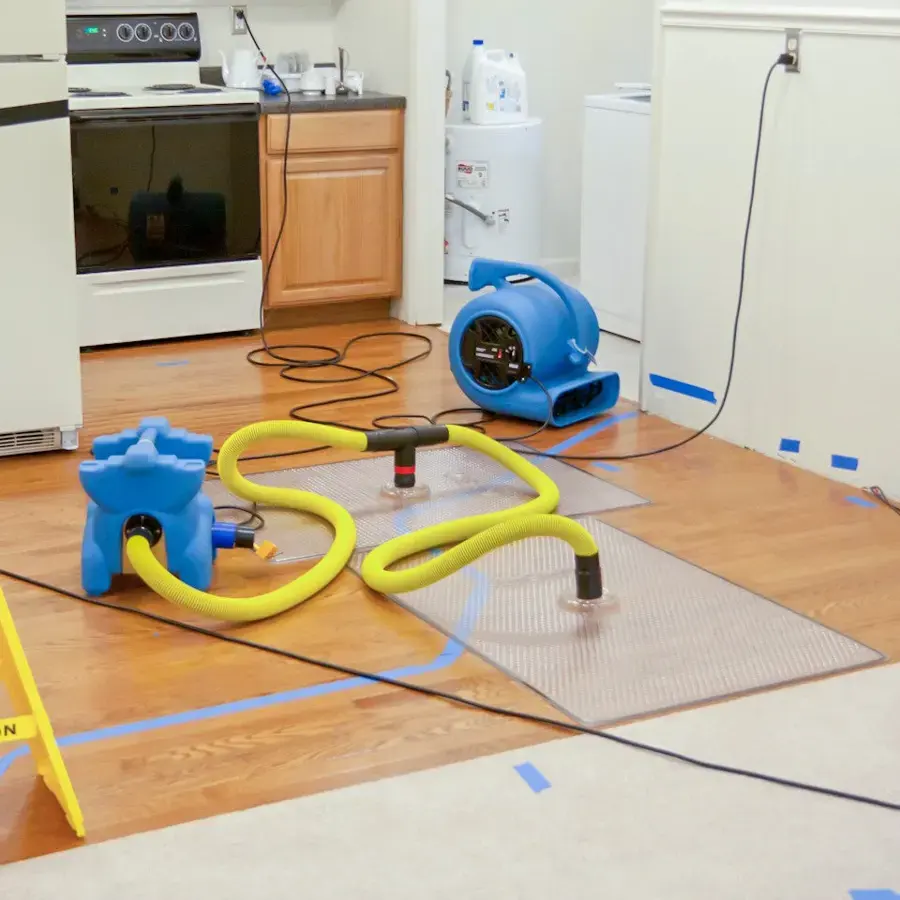
First steps for structural drying and dehumidification in Newport Beach
- 1
Keep the house closed
Close windows and doors in the wet area; damp coastal air slows drying.
- 2
Leave equipment running
Do not turn off air movers or dehumidifiers at night; drying works around the clock.
- 3
Empty or check dehumidifiers
If a unit has a bucket, check it; most professional units pump out.
- 4
Keep a clear path
Leave room around equipment so air can move across wet surfaces.
What does structural drying and dehumidification cost in Newport Beach, CA?
In Newport Beach, CA, structural drying typically runs $1,200 to $9,000, depending on the number of rooms, the class of loss, the materials involved and how many days the equipment runs.
Class 1 or 2, one area
$1,200 to $3,000
- Air movers and LGR dehumidifier
- Daily readings
- Drying log
Several rooms or hardwood
$3,000 to $6,000
- Hardwood drying mats
- Wall cavity drying
- Moisture map
Class 4: slab, plaster, deep wood
$6,000 to $9,000
- Desiccant dehumidification
- Extended monitoring
- Claim documentation
Ranges are typical, not a quote: category of water, square footage, material class and how fast drying started move the number most. Run the Newport Beach water damage cost calculator for a closer range.
How structural drying and dehumidification is handled in Newport Beach
The tech who does the walkthrough maps moisture before any equipment goes down, so the drying plan matches what is actually wet. Equipment stays until the readings say dry, not until it looks dry.
- 1
Measure
Material readings and a dry reference set the goal before equipment goes in.
- 2
Set equipment
Air movers and dehumidifiers are placed to each room's evaporation load.
- 3
Monitor daily
The drying team logs readings and moves equipment as areas dry.
- 4
Verify dry
Equipment comes out when materials reach 2 to 4 points of the dry reference.
How a drying plan is built
- Category of water (1, 2 or 3) decides what is dried and what is removed.
- Class of loss (1 to 4) decides how much equipment each room needs.
- Air movers are placed to the room's evaporation load, not by guesswork.
- LGR dehumidifiers handle most rooms; desiccants handle Class 4 materials like concrete, hardwood and plaster.
Coastal air and drying
The marine layer that covers Newport Beach in late spring and early summer keeps outdoor air damp. Opening windows can slow drying, so the drying team keeps rooms closed and lets dehumidifiers control the air. Psychrometric readings, temperature and humidity inside and out, are logged daily with material readings.
The EPA indoor air quality pages explain why moisture control matters, and the USGS Water Science School covers humidity and evaporation.
Hardwood, plaster and slabs
Hardwood is dried with mats that pull air through the boards, slowly, to limit cupping. Plaster in older beach cottages takes longer than drywall. Slabs get dehumidification and air across the exposed concrete, with readings until they match a dry reference. See slab leak water damage for the slab work.
Structural drying and dehumidification across Newport Beach and the harbor
The Newport Beach restoration crew covers ZIPs 92658 to 92663, from Balboa Island, Lido Isle and the Peninsula up through Newport Heights, Eastbluff and Corona del Mar to Newport Coast.
Nearby coverage reaches Costa Mesa, Irvine, Huntington Beach, Fountain Valley, Santa Ana.
See every Newport Beach neighborhood and nearby town covered
Related water damage services in Newport Beach
Structural Drying and Dehumidification questions in Newport Beach, CA
Still damp after the cleanup?
Active water in Newport Beach is treated as urgent at any hour.
(888) 450-9281Structural drying in Newport BeachWhat does structurally dry mean?
It means framing, subfloor, drywall and concrete read within 2 to 4 points of a dry reference material in the same home, not just that surfaces feel dry.
Why not just use fans?
Fans move moisture into the air, but without dehumidification the water settles back into materials. Air movers and dehumidifiers work as a pair.
What is a desiccant dehumidifier?
A unit that pulls moisture with a drying material instead of a cold coil. It works well on dense materials like concrete, hardwood and plaster.
Can I turn the equipment off at night?
It is best left running. Turning it off lets moisture settle back into materials and stretches the drying time.
How long does structural drying take?
Most losses dry in three to seven days. Class 4 materials take longer, and drying ends on readings.
Does the equipment use a lot of power?
It draws steady power for several days. The crew spreads equipment across circuits so breakers do not trip.
Wet framing or floors? Start real drying now.
The drying team sizes the equipment, logs readings daily and dries to the IICRC S500 goal, 24/7.
(888) 450-9281Call for structural drying- Active water treated as urgent
- Dried to the IICRC S500 standard
- Daily readings for the claim file