Slab Leak Water Damage in Newport Beach, CA
A slab leak soaks flooring from below long before a puddle shows. The slab leak crew maps the wet area, opens the flooring over it and dries the concrete to the IICRC S500 goal, 24/7.
(888) 450-9281Get the slab leak dry-out started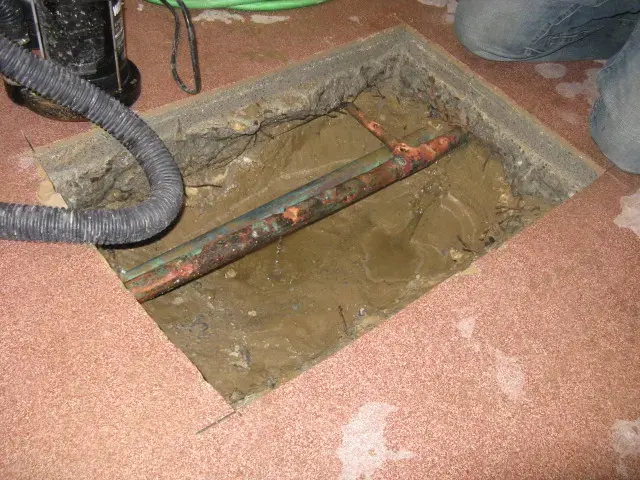
First steps for slab leak water damage in Newport Beach
- 1
Shut the main valve
If water is reaching the floor, close the main valve and leave it closed until a plumber isolates the leak.
- 2
Run the meter test
With every fixture off, watch the leak indicator on the water meter. If it keeps turning, water is going somewhere.
- 3
Pull rugs and furniture
Move area rugs, furniture and boxes off the wet floor so the crew can see the full wet area.
- 4
Photograph the floor
Take photos of stains, cupped boards and wet carpet before anything is opened. They start the claim file.
What does slab leak water damage cost in Newport Beach, CA?
In Newport Beach, CA, slab leak water damage cleanup typically runs $2,500 to $15,000, depending on how far the water spread, the flooring over the leak, how long it ran and whether walls and cabinets got wet.
Small area, tile or carpet
$2,500 to $5,000
- Moisture mapping
- Pad and baseboard removal
- Slab drying
Several rooms or wood floors
$5,000 to $9,500
- Flooring removal
- Lower wall drying
- Daily slab readings
Long-running or under cabinets
$9,500 to $15,000
- Cabinet toe-kick removal
- Desiccant drying
- Full claim documentation
Ranges are typical, not a quote: category of water, square footage, material class and how fast drying started move the number most. Run the Newport Beach water damage cost calculator for a closer range.
How slab leak water damage is handled in Newport Beach
The tech who does the walkthrough maps moisture before any equipment goes down, so the drying plan matches what is actually wet. Equipment stays until the readings say dry, not until it looks dry.
- 1
Map the wet slab
Thermal imaging and meters show where water spread under the flooring, past what is visible.
- 2
Open what cannot dry
The crew removes pad, cupped wood and loose tile over the wet area, with photos first.
- 3
Dry the concrete
Dehumidifiers and air movers work on the exposed slab and lower walls until the readings drop.
- 4
Verify and hand off
Drying ends at the goal reading, and the file goes to you and your adjuster for repairs.
How a slab leak shows up in a Newport Beach home
Hot water pipes leave a warm patch on tile. Carpet feels damp along a wall with no plumbing behind it. Engineered wood starts to cup in a hallway. The water meter keeps moving with every fixture off.
- Warm spots on tile or stone floors over a hot water pipe.
- Damp carpet or a musty smell with no visible source.
- Cupping or lifting wood flooring and swelling baseboards.
- A water bill that climbs with no change in use.
The slab leak sign check walks through these signs before anyone opens the floor.
What the dry-out involves
A plumber finds and repairs or reroutes the pipe. The restoration team handles the water: the tech who does the walkthrough maps the wet area with thermal imaging and pinless meters, then the crew removes the flooring and pad that cannot dry in place.
Concrete gives up water slowly. The drying team runs LGR dehumidifiers, and desiccants when the slab is soaked, with air movers aimed at the exposed concrete and lower walls. Daily readings track the slab against a dry reference until it reaches the drying goal.
Flooring, walls and cabinets
- Tile over a dried slab often stays; loose or hollow tiles come up.
- Carpet pad soaked from below is removed; the carpet itself sometimes dries.
- Engineered and solid wood are judged by readings; cupped boards usually come out.
- Baseboards and the bottom of drywall get checked, because slab water wicks up the wall.
For the claim, the structural drying logs and pre-demolition photos show why each material was dried or removed. The EPA WaterSense leak checks explain the meter test, and the California Department of Insurance covers how water claims work.
Slab leak water damage across Newport Beach and the harbor
The Newport Beach restoration crew covers ZIPs 92658 to 92663, from Balboa Island, Lido Isle and the Peninsula up through Newport Heights, Eastbluff and Corona del Mar to Newport Coast.
Nearby coverage reaches Costa Mesa, Irvine, Huntington Beach, Fountain Valley, Santa Ana.
See every Newport Beach neighborhood and nearby town covered
Related water damage services in Newport Beach
Slab Leak Water Damage questions in Newport Beach, CA
Warm spot on the floor?
Active water in Newport Beach is treated as urgent at any hour.
(888) 450-9281Newport Beach slab leak help, 24/7Does the restoration team fix the pipe?
No. A plumber finds and repairs or reroutes the pipe. The restoration team extracts the water, removes wet materials and dries the slab and walls.
How long does a slab take to dry?
Most slab leak dry-outs take four to ten days. A thick slab soaked for weeks can take longer, and drying ends on readings, not a date.
Will all my flooring come up?
Only what cannot dry or is damaged. Tile over a dried slab often stays, while soaked pad and cupped wood usually come out.
Is slab leak water damage covered by insurance?
Many policies treat the sudden water damage differently from the pipe repair and from slow, long-term leaks. Coverage depends on your policy, so check with your own insurer.
Why do older Newport Beach homes get slab leaks?
Post-war through 1970s homes often run copper supply pipes under the concrete, and decades of water pressure and pipe wear lead to leaks where the copper rubs or thins.
Can I keep living in the house during drying?
Usually yes. The drying team sets up in the affected rooms, and the equipment runs around the clock, so expect noise and warm air in those rooms.
Water under the slab? Get it dried properly.
The slab leak crew maps the wet concrete, opens what cannot dry and dries the rest to the IICRC S500 goal, any hour.
(888) 450-9281Call for slab leak water removal- Active water treated as urgent
- Dried to the IICRC S500 standard
- Daily readings for the claim file