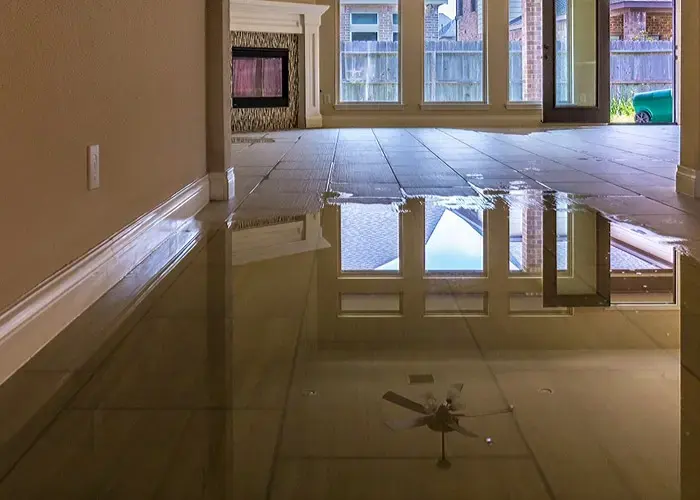
Winter king tides push Newport Harbor and Upper Newport Bay water against the Balboa Island seawall, and on the highest days that water can reach the ground floor of a cottage. When the bay drops back, it leaves salt, silt and a cleanup job that is very different from a rain leak or a broken pipe.
Key takeaways
- Bay water is handled as Category 3 contaminated water, so soaked porous materials are removed instead of dried in place.
- Extraction comes first, then wet flooring and the bottom of the walls, then structural drying with meter readings.
- Salt left behind by bay water holds moisture and corrodes fittings, so surfaces are cleaned as well as dried.
- Photographs taken before anything is moved help with a claim, and the policy should be checked for what it says about flood water.
- Older cottages from the 1920s to the 1940s can hold moisture in low framing, so readings decide when drying stops.
What a king tide does on Balboa Island
A king tide is a very high tide. In Newport Beach the winter ones push bay water against the Balboa Island seawall and, according to the local flood pattern, over low streets on the Balboa Peninsula as well.
For most of the year the seawall does its job. On the highest tides, water can come over the top, through a gate or up through a low drain and spread across a yard, a patio or a ground floor room.
Why the island is different from other flood cases
A rain flood comes from above and a pipe leak comes from inside the walls. Bay water comes from outside at ground level, carrying harbor sediment, salt and whatever else was floating in the water.
That difference drives almost every decision that follows, from what gets thrown out to how the room is cleaned.
The cottage factor
Many Balboa Island homes are beach cottages from the 1920s to the 1940s. Older framing, old plaster or thin wall coverings and original flooring all react to bay water in their own way.
Because of that, a crew goes by meter readings in each material instead of guessing from how a surface looks.
Why bay water counts as Category 3
Restoration work sorts water into categories by its source. Clean supply water is Category 1, and bay water falls into Category 3 because it carries contaminants from outside.
The practical result is simple. Porous materials that soaked up Category 3 water, such as carpet, pad, insulation and the lower part of drywall, are normally cut out and removed instead of dried and kept.
- Carpet and pad that sat in bay water are removed.
- Drywall is cut above the highest wet mark, and wet insulation behind it comes out.
- Hard surfaces such as tile and sealed concrete are cleaned and treated, not thrown away.
- Belongings that soaked up bay water are separated from dry items right away.
What comes first: pulling the water out
Standing water is removed before anything else. Pumps and extraction tools lift water off the floor while it is still sitting on the surface, before it wicks into drywall, trim and subfloor.
This is the step where speed matters most. A fast water extraction job keeps a wet floor from becoming a wet wall, and a wet wall from becoming a much larger job.
A sensible order of work
The order below keeps the cleanup from spreading contamination into rooms the bay water never reached.
- Photograph the high water mark and the damaged rooms before anything is moved.
- Switch off power to wet outlets if it can be done safely, and stay out of standing water.
- Extract standing water from the lowest point toward a single exit.
- Remove soaked carpet, pad and other porous materials.
- Open the bottom of wet walls so the cavity can be cleaned and dried.
- Treat and clean hard surfaces before drying equipment is set.
Drying the cottage after the cleanup
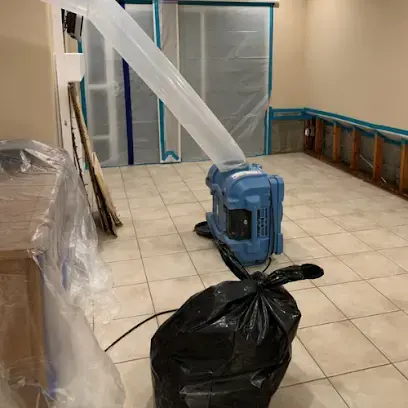
Once the contaminated material is gone, the structure still has to dry. Air movers push dry air across floors and wall bottoms, and dehumidifiers pull the moisture out of the air so it does not settle back into the framing.
Newport Beach has a mild coastal climate and a damp marine layer in late spring and early summer, so open windows rarely do the job alone. A proper structural drying setup uses meters to track each material until it matches a dry reference reading.
- Readings are taken on day one so there is a starting point.
- Equipment is moved or adjusted as some areas dry faster than others.
- Drying stops only when every checked material reaches its dry reading, not when the room feels dry.
Salt, finishes and the last details
Salt is the part of a bay flood that people tend to forget. It stays in the surface after the water is gone, attracts moisture from the air and corrodes exposed metal such as fittings, hinges and appliance connections.
That is why a bay flood job includes cleaning and treating surfaces, not only drying them. A room that dried but was never cleaned can stay damp to the touch and smell of the harbor for weeks.
What to ask about before rebuilding
Before new drywall, flooring or paint goes in, ask for the final moisture readings and a note of what was removed. Rebuilding over a wall that is still damp is how a second problem starts.
Documentation and the insurance question
A bay flood is a water event with a specific source, and insurers care about the source. Standard homeowner coverage and flood coverage are separate questions, so the policy itself should be read for what it says about flood water and rising water.
A tidal flood cleanup record that lists the water source, the rooms affected, the materials removed and the daily readings gives an adjuster something clear to work from.
- Take photographs and short videos before anything is moved.
- Keep a list of damaged belongings with notes on where each item was.
- Save the moisture readings and the list of removed materials.
- Ask the insurer what documentation it wants before work is finished, not after.
When a king tide is forecast
Winter king tides are predictable enough that residents often know a high tide is coming. Moving valuables off the floor, clearing low drains and knowing where the water shutoff and breaker panel are all make a bad day shorter.
If water does come in, the first call should go to a team that treats bay water as the contaminated flood it is.
Questions
Is king tide water in a house considered contaminated?
Yes. Bay water is handled as Category 3 water because it carries harbor sediment and outside contaminants. Porous materials that soaked it up are normally removed.
Can wet carpet from a bay flood be saved?
Not usually. Carpet and pad that sat in bay water are removed, while hard surfaces such as tile can be cleaned and treated.
Why does salt matter after a bay flood?
Salt stays on surfaces, holds moisture and corrodes exposed metal. Cleaning removes it so the room does not stay damp after drying.
How do I know the cottage is fully dry?
Meter readings in framing, flooring and wall bottoms are compared with a dry reference. The room feeling dry is not enough.
Does the damage need to be photographed first?
Photographs of the high water mark and affected rooms, taken before anything is moved, help an insurance claim and make the scope clear.