Little Saigon runs mostly along Bolsa Avenue between Magnolia Street and Brookhurst Street, and it is full of shops, restaurants and services in connected buildings. When water gets into one, it can reach the neighbors, and every day closed costs money.
Key takeaways
- The first goal on day one is to stop the water and protect people, stock and records.
- Photographs, an inventory of damaged items and a call to the insurer should happen before cleanup is finished.
- In a shared building, the landlord and neighboring tenants should be told early, because water can cross walls and ceilings.
- Extraction and drying equipment can often run around business needs, including after hours.
- Contaminated water, such as sewage, is a different job and calls for removal and disinfection.
Why Little Saigon is a special case
Bolsa Avenue holds well known businesses such as the Asian Garden Mall, along with many smaller shops and restaurants. The Westminster Mall site is another known shopping landmark in the city.
Many of these businesses share walls, ceilings or whole buildings. A pipe break, an overflowing sink or a failed water heater in one unit can become a problem for several tenants.
Westminster sits on a flat coastal plain that is almost entirely built up with homes and businesses. Standing water has little slope to drain away, so it is pulled out with extraction equipment instead of waiting for it to move on its own.
The first steps after water appears
The order below puts safety first and then protects what can be saved.
Do not walk through standing water if the power is on, and do not run electronics in a wet room. Safety comes before stock.
- Find and close the water shutoff for the unit or the building.
- Switch off power to wet areas if it can be done safely.
- Move people out of any area with a sagging ceiling or standing water.
- Lift stock, paper records and electronics off the floor and onto dry shelves.
- Photograph the water, the source and the damaged goods before moving more.
- Call the landlord or property manager and the insurer.
- Keep staff and customers away from wet floors and sagging ceilings.
Protecting stock, records and equipment
A shop owner has more to lose than a homeowner. Inventory, point of sale equipment, refrigeration and paper records can all be damaged by water.
Items that are still dry should be moved first. Wet paper and cardboard fall apart quickly, so high value items and records come out before bulk goods.
Food, packaging and anything that touched contaminated water is not worth the risk and is normally thrown away. Sealed items that stayed dry can often stay in use.
Refrigeration and electronics should be checked before they are turned back on, since water inside a motor or a control panel can cause a second failure.
Keep a simple list
A written list of what was damaged, with photographs, supports a claim. Note the date, the room and the item, and keep receipts where they exist.
Water in a shared building
When businesses share a roof, a wall or a ceiling, water crosses boundaries. A leak in one suite can drip into the suite below or soak the wall next door.
A commercial water damage job in this kind of building usually documents each suite separately, which helps the landlord, each tenant and each insurer.
Owners of neighboring businesses will want to know early. A short, polite message to each neighbor and the landlord with the date and the source is better than waiting until water appears on their side of the wall.
If the source is in a shared pipe, the landlord may need to close a shutoff that serves the whole building.
Extraction, drying and keeping the business moving
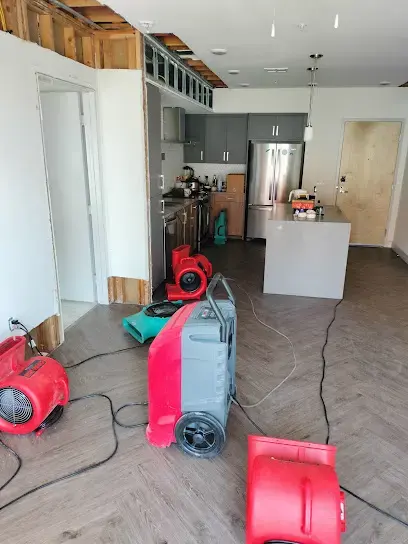
Standing water comes out first. A fast water extraction job protects flooring, walls and shelving before water wicks into them.
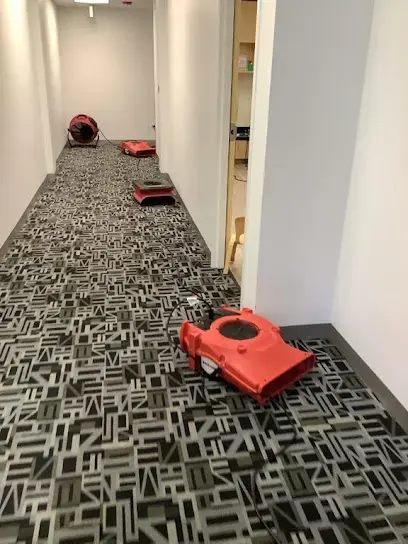
After extraction, air movers and dehumidifiers dry the space. In a working business, the schedule matters, and drying equipment can often be placed so part of the space stays usable.
Business owners should also ask early about the plan for reopening. A written schedule with dates for removal, drying and rebuilding lets the owner tell staff and customers what to expect.
- Extraction removes the standing water.
- Wet drywall, insulation and flooring are removed where readings show it is needed.
- Air movers and dehumidifiers dry the rest.
- Daily readings show when the space is dry enough to rebuild.
When the water is sewage
A blocked drain can send sewage into a restaurant kitchen or a restroom. That water is contaminated and should not be cleaned up with ordinary tools.
The Midway City Sanitary District says it checks whether a blockage is in the public sewer or the owner's private lateral, and that grease, roots and wipes labeled flushable cause most backups. The private owner clears a private backup and cleans the spill.
A sewage backup in a restaurant or a shop calls for closing the affected area at once. Food and food contact surfaces should be kept away from the water, and the area should be cleaned and disinfected by people with the right protective gear.
What to tell the insurer and the landlord
Tell both early and in writing. Include the date, the source of the water if it is known, the areas affected and the photographs.
The Westminster page lists the water damage services for the city, so owners can see which service fits the problem.
A business owner may also want to keep records of lost sales and extra costs while the shop is closed, since some policies address them. The policy itself says what applies.
Questions
What is the first thing a shop owner should do after a water loss?
Shut off the water source, protect people and move stock and records off the floor. Then photograph everything and call the landlord and the insurer.
Can drying work around business hours?
Often yes. Equipment can be placed so part of the space stays usable, and some work can be done after hours.
What if the neighbor suite is also wet?
Each suite should be documented separately, and the landlord should be told so the shared walls and ceilings are checked.
How is a sewage backup different?
It is contaminated water. Affected materials are removed and surfaces are disinfected, and ordinary cleaning tools are not enough.
Who clears a private sewer backup in Westminster?
The Midway City Sanitary District says it clears public blockages, and the private owner clears a private backup and cleans the spill.
Should the shop close while the space is drying?
That depends on how much is wet. Some spaces can stay partly open while equipment runs, and some areas must close until the work is finished and readings are normal.