Structural Drying and Dehumidification in Huntington Beach, CA
A surface that feels dry can still hold water in the framing. The Huntington Beach crew dries studs, subfloors and walls until moisture readings match an unaffected reference.
(888) 450-9281Start the structural dry-out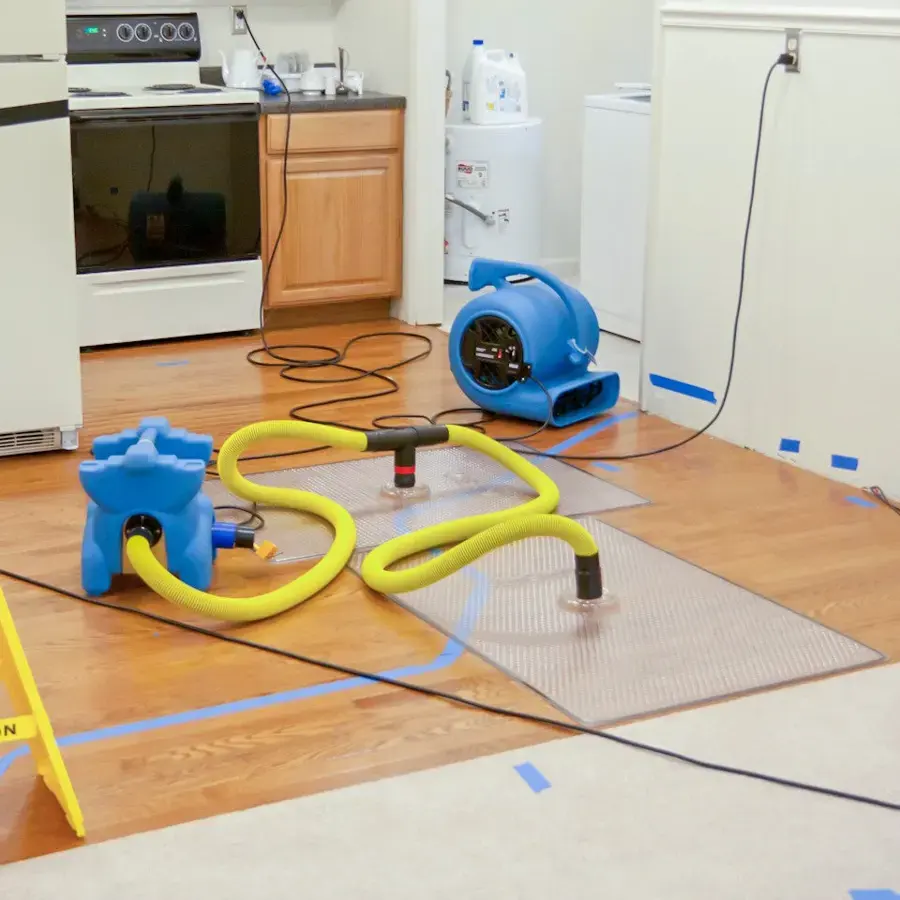
First steps for structural drying and dehumidification in Huntington Beach
- 1
Open cabinet doors
Open cabinets, closets and doors so air can reach wet walls and floors.
- 2
Keep wet rooms closed
Close doors to dry rooms so the drying equipment works only on the wet space.
- 3
Leave the equipment on
Machines run around the clock, and turning them off early leaves moisture in the framing.
- 4
Track the changes
Report new stains, odors or swelling, which can signal moisture not yet found.
What does structural drying and dehumidification cost in Huntington Beach, CA?
In Huntington Beach, CA, structural drying typically runs $1,200 to $9,000. Room count, class of loss, building materials and the number of days the equipment runs all move the total.
Class 1 or 2, one area
$1,200 to $3,000
- Moisture mapping
- Air mover setup
- Daily readings
Several rooms or hardwood
$3,000 to $6,000
- Hardwood mat system
- Wall bases dried
- Longer monitoring
Class 4: slab, plaster, deep wood
$6,000 to $9,000
- Desiccant units
- Dense materials tracked
- Complete claim records
Ranges are typical, not a quote: category of water, square footage, material class and how fast drying started move the number most. Run the water damage cost calculator for a closer range.
How structural drying and dehumidification is handled in Huntington Beach
The tech who does the walkthrough maps moisture before any equipment goes down, so the drying plan matches what is actually wet. Equipment stays until the readings say dry, not until it looks dry.
- 1
Survey the moisture
Meters and thermal imaging show which framing, floors and walls hold water.
- 2
Place the equipment
Air movers and dehumidifiers go in for each room, with desiccants for dense materials.
- 3
Watch the numbers
Daily readings steer changes to the setup as materials dry.
- 4
Close out the job
Equipment leaves once readings reach the goal, and the logs go to you.
Ground moisture in Huntington Beach
A large part of southeastern Huntington Beach has a high water table, and some of that area is classified as wetlands. After flooding, ground moisture can add to the load on a building, so drying plans allow for it.
How drying equipment is chosen
Air movers sweep moving air over wet surfaces to lift moisture, LGR dehumidifiers condense it out of the room, and desiccant units take on dense materials such as concrete and plaster. Each room gets its own mix based on size, materials and class of loss.
- Moisture meters check studs, plates and subfloors.
- Thermal imaging finds wet areas behind finished walls.
- Cavity drying systems push air into closed walls.
Subfloors and wall plates are slow to release moisture, so their readings are watched closely even after carpet and drywall surfaces test dry.
Knowing when it is done
Equipment does not leave on a timer. Each day's psychrometric readings are checked against the unaffected reference, and the job closes once wet materials land close to it. Daily logs and photos join the claim file. See water extraction for the first phase.
Larger buildings are covered on the commercial water damage page.
Structural drying and dehumidification across Huntington Beach and nearby towns
Structural drying work covers ZIPs 92646, 92647, 92648, 92649, 92605 and 92615, including Southeast Huntington Beach, Oak View, Downtown Huntington Beach, Huntington Harbour and Bolsa Chica.
The same service nearby: structural drying and dehumidification in Newport Beach, Fountain Valley, Westminster.
Water damage restoration in Huntington Beach · every town covered
Related water damage services in Huntington Beach
Structural Drying and Dehumidification questions in Huntington Beach, CA
Wet inside the walls?
Active water in Huntington Beach is treated as urgent at any hour.
(888) 450-9281Structural drying help in Huntington Beach, 24/7Why does drying take days after the water is gone?
Moisture soaks into studs, subfloors and plaster and leaves slowly. Surface dryness does not show what is inside the structure.
What is a dry reference?
It is a reading from an unaffected area of the same building. Wet materials are dried until they sit close to that number.
Why do dehumidifiers run along with air movers?
Air movers lift moisture out of materials, and dehumidifiers remove that moisture from the air. Without both, it settles back into the structure.
How long does structural drying take?
Three to seven days is typical. Hardwood, plaster and concrete take longer, and readings decide when equipment leaves.
Can drying head off mold?
Fast, thorough drying is the best protection, because damp materials can start growing mold in a day or two.
Will the equipment be loud or use a lot of power?
Machines run continuously and add some noise and electricity use, which is the trade for drying quickly.
Need a proper dry-out? Call the crew.
The crew surveys the moisture, runs the equipment and dries to the IICRC S500 goal, 24/7.
(888) 450-9281Call for Huntington Beach structural drying- Active water treated as urgent
- Dried to the IICRC S500 standard
- Daily readings for the claim file