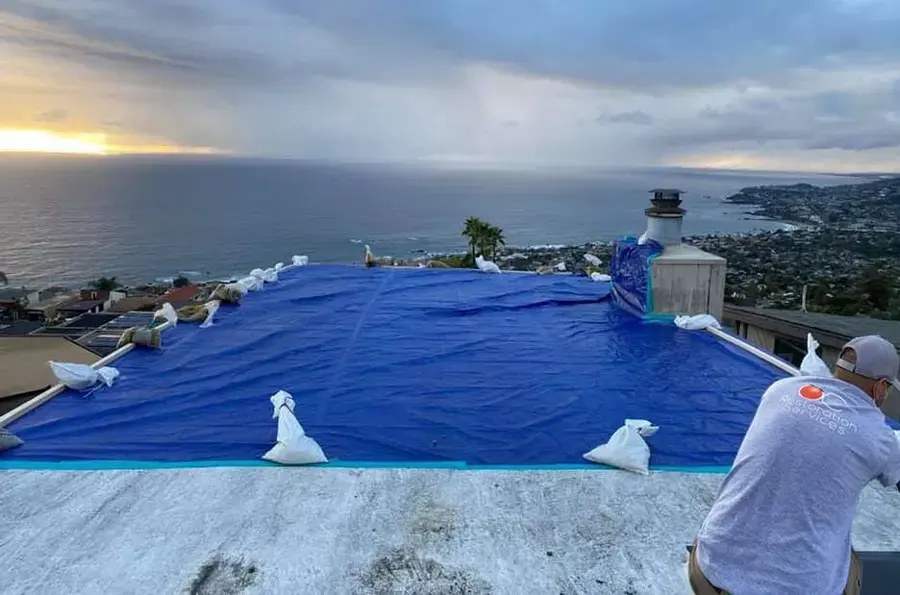
On Friday, November 21, 2025, a storm flooded streets near Edinger Avenue and Goldenwest Street and completely flooded Greer Park South. City crews handled flood calls overnight, including rescues from stranded vehicles, mostly on the north side of the city.
Key takeaways
- Huntington Beach says its storm drains fill to capacity in heavy rain and nearby pump stations cannot always move rainwater into the flood control channels.
- Flood water is not clean water, so soaked porous materials are usually removed instead of dried in place.
- Photographing the high water mark and keeping a list of damaged items supports any claim.
- The city notes that homeowner's insurance does not cover flood damage and that it takes part in the National Flood Insurance Program.
- Extraction comes first, followed by removal of wet materials and structural drying with readings.
What the November 2025 storm showed
The storm flooded streets, forced rescues from stranded vehicles and left a city park underwater. It was a reminder that heavy rain can overwhelm drainage even in a city built to move water.
The city explains why. During heavy rain the storm drain system fills to capacity, and nearby pump stations cannot always move rainwater into the flood control channels.
The overnight rescues show how fast conditions changed. The record names Edinger Avenue, Goldenwest Street and Greer Park South, and no claim is made here about which homes took in water.
A low and wet city
The city says that 75 percent of Huntington Beach sits 25 feet or below sea level, which raises flood vulnerability. A large part of southeastern Huntington Beach also has a high water table, and some of those areas are classified as wetlands.
Where the water comes from
The city names the Santa Ana River, the East Garden Grove Wintersburg Channel, the Talbert Channel, the Huntington Beach Channel and the Pacific Ocean as flood sources.
The city also says the greatest threat from severe winter storms runs from December through March, and from tropical storms from August through October.
Flood water can arrive from more than one direction. High tides can block the Santa Ana River from emptying into the ocean, which backs floodwater into residential areas, mostly around Sunset Beach and Huntington Harbour.
Typical surf is two to four feet, but waves up to 25 feet have occurred in heavy storms.
Why flood water is treated as contaminated
Water that moves across streets, parking lots and yards collects dirt, oil and waste before it reaches a building. Once it is inside, it is not clean supply water.
For that reason, carpet, pad and wet insulation that soaked up flood water are normally removed. Hard surfaces are cleaned and treated.
- Carpet and pad that sat in flood water are removed.
- Wet drywall is cut above the highest wet mark.
- Insulation that soaked up water is taken out.
- Hard floors and framing are cleaned and treated before drying.
The first day after the water comes in
The first priority is safety. Stay out of standing water if power is on, and do not use a vacuum or an appliance in a wet room.
After that, the focus is on documentation and on getting the water out.
Do not wait for the water to drain by itself. Water that sits on a floor soaks into carpet, pad and the bottom of walls, and the job gets bigger the longer it waits.
Avoid running household fans and heaters as the only plan. They move wet air around but do not remove the water or the moisture inside the walls.
- Photograph the high water mark on the walls and the damage to floors and belongings.
- Move items to higher ground if it is safe.
- Make a list of damaged contents with notes on each item.
- Notify the insurer and ask what it needs before work is finished.
- Call for extraction while the water is still standing.
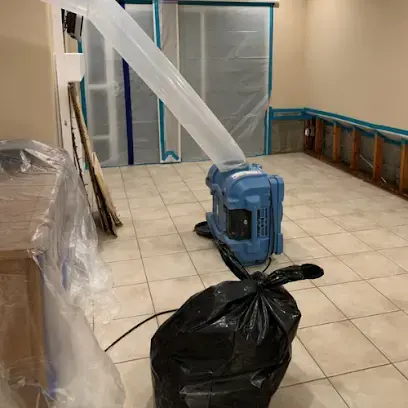
Extraction and drying
A water extraction job pulls standing water out before it wicks into drywall and trim. Pumps and extraction tools do this far faster than towels and mops.
After extraction, wet materials are removed and the structure is dried. The storm water damage work continues with air movers and dehumidifiers, and readings show when the framing and floors are dry.
Drying goes on until the readings in the framing, subfloor and flooring match a dry reference. Most of the work is checking and adjusting equipment, which is why daily readings matter.
An owner can ask for a copy of the readings at the end, since they show the structure was dried and are useful for the insurer.
Ground moisture in the southeast
With a high water table in parts of the southeast, ground moisture can add to the job. Drying is checked with a meter in the framing, not judged by feel.
Flood insurance and what the city says
The city states that homeowner's insurance does not cover flood damage, and that it takes part in the National Flood Insurance Program. In practice, an owner should read the policy before a storm, not after.
FEMA released new flood maps for the Huntington Beach coastline on March 21, 2019, which placed Huntington Harbour and Sunset Beach properties in the Special Flood Hazard Area as AE or VE zones.
If a home sits in a floodplain and is substantially improved after damage, the city says that new construction or an improvement equal to or above 50 percent of the building's depreciated value must meet its floodplain overlay rules, which require elevated residential structures.
Preparing before the next storm
A few small steps cost little and reduce the damage when water does come in.
The city also notes that dumping into storm drains and flood control channels violates the municipal code, and that even grass clippings and branches can clog them.
The Huntington Beach page lists the water damage services available in the city, from extraction to sewage cleanup and structural drying.
- Keep storm drains and gutters clear of leaves and debris.
- Know where the water shutoff and the breaker panel are.
- Store valuables and paperwork above floor level.
- Read the policy and ask about flood coverage.
Questions
What did the November 21, 2025 storm flood in Huntington Beach?
It flooded streets near Edinger Avenue and Goldenwest Street and completely flooded Greer Park South. City crews handled flood calls overnight, including rescues from stranded vehicles.
Why does flood water get treated as contaminated?
It moves across streets and yards and collects dirt and waste. Porous materials that soak it up are normally removed.
Does homeowner's insurance cover flood damage?
The city says it does not. The city takes part in the National Flood Insurance Program, so flood coverage is a separate question.
When is storm season in Huntington Beach?
The city names December through March as the greatest threat from severe winter storms and August through October for tropical storms.
What should be done first after water enters a home?
Stay safe, photograph the damage, list damaged items and have the standing water extracted before it wicks into walls.
Where does flood water in Huntington Beach come from?
The city names the Santa Ana River, the East Garden Grove Wintersburg Channel, the Talbert Channel, the Huntington Beach Channel and the Pacific Ocean as flood sources.