Sewage coming up through a floor drain, a tub or a toilet is one of the worst water problems a household can face. In Santa Ana, the city handles the sewer mains, but the pipe between the house and the main belongs to the property owner.
Key takeaways
- The City of Santa Ana Public Works Agency runs the city sewer system but says it is not responsible for the 46,000 private sewer laterals, which are the property owner's to maintain.
- The city names fats, oils and grease as the most common cause of blocked sewers.
- Sewage is Category 3 contaminated water and should be handled with protective gear, containment and disinfection.
- Porous materials touched by sewage, such as carpet, pad and wet drywall, are normally removed.
- Do not try to clean up a sewage backup with a household mop and bucket.
Who is responsible for what in Santa Ana
The City of Santa Ana Public Works Agency runs the citywide water and sewer system. The city also cleans most of its sewer mains proactively each year.
The part of the system between the house and the main is different. The city says it is not responsible for maintaining the 46,000 private sewer laterals, which are the property owner's to maintain.
What that means in a backup
If sewage comes up inside a home, the first question is where the blockage sits. A blockage in the private lateral is the owner's to clear.
A blockage in the city main is a different case.
A plumber with a camera can usually show which one it is, and that answer decides who pays for the repair. The cleanup of the damage inside the home is a separate job.
What causes most backups
The city names fats, oils and grease as the most common cause of blocked sewers. Grease poured down a kitchen drain cools, hardens and slowly narrows the pipe until it blocks.
Roots, flushed wipes and damaged pipe sections cause other backups, but grease is the one the city points to first.
A kitchen drain is a common place for the problem to begin. Grease from cooking mixes with food scraps and soap, then coats the inside of the pipe and catches whatever else comes along.
Over months, the pipe narrows until a normal flow cannot pass, and the water backs up into the lowest drain in the home.
- Pour cooking grease into a can, not down the sink.
- Wipe greasy pans with a paper towel before washing.
- Keep wipes and paper towels out of the toilet, even if the package says flushable.
- Have a slow drain checked before it becomes a backup.
What to do when sewage comes up
Sewage carries bacteria and other contaminants, and the steps in the first moments are mostly about staying away from it.
A backup that shows at the lowest drain in a house, such as a shower or floor drain, often points to a blockage in the lateral or the main instead of a single fixture. A plumber's camera can confirm it.
- Stop using sinks, toilets, showers and washers so no more water enters the drain.
- Keep children, pets and anyone with a weak immune system out of the area.
- Do not walk through the water in bare feet or touch it without protection.
- Photograph the damage before anything is moved.
- Call a plumber to find the blockage and a cleanup team to remove the sewage.
How a sewage cleanup works
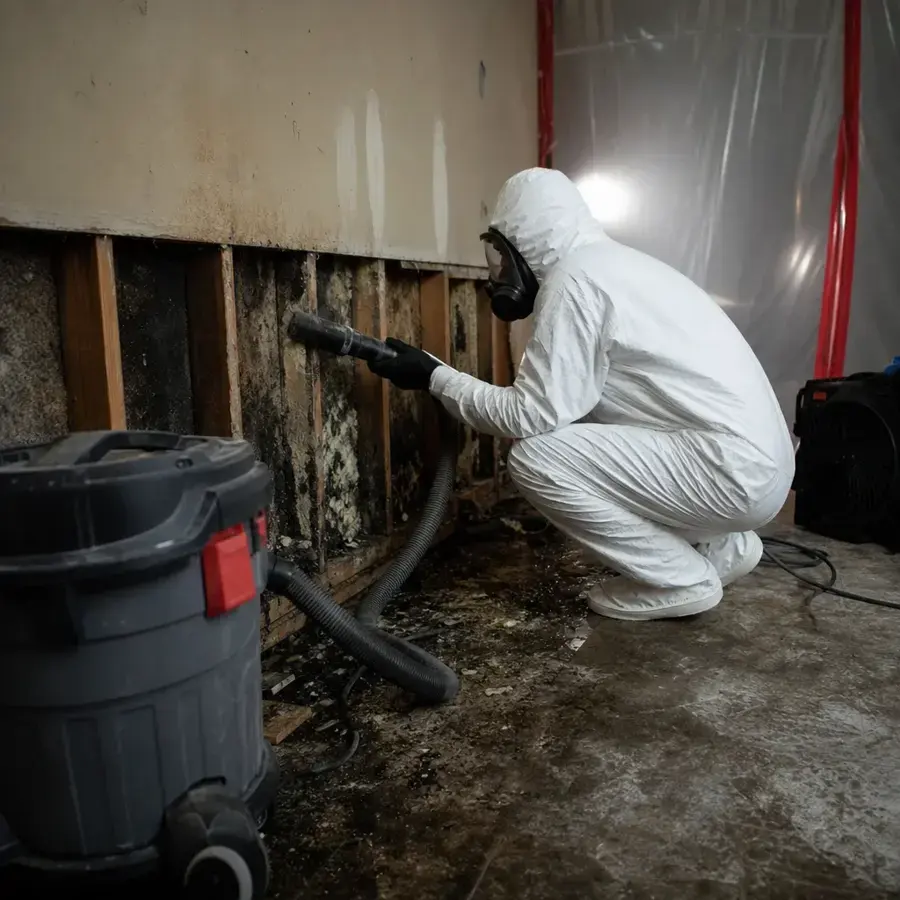
Sewage water is Category 3, the most contaminated class. A sewage backup cleanup team treats it that way from the start, with protective gear, containment and a controlled order of work.
The standing water is extracted, the affected materials are removed and the surfaces are cleaned and disinfected before any drying begins.
After the removal, surfaces are cleaned and treated, and air scrubbing may be used so contamination does not drift into other rooms. Every step is meant to leave the home safe to rebuild.
What gets removed
Porous materials that soaked up sewage cannot be reliably cleaned. Carpet, pad, insulation and the lower part of drywall are normally cut out and bagged.
Hard surfaces such as tile, sealed concrete and framing are cleaned and treated instead of thrown away.
Containment
Barriers and controlled airflow keep contamination from spreading to clean rooms. This is one of the main differences between a professional job and a household cleanup.
Drying after the cleanup
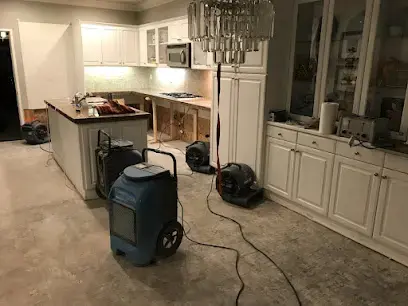
Once the contaminated material is out and the area is treated, the structure has to dry. Santa Ana is dry for most of the year, so lasting moisture usually comes from a leak or a backup, and it needs to be pulled out of older construction on purpose.
Structural drying uses air movers and dehumidifiers with meter readings, and it continues until the framing and floors reach normal readings.
Older construction can hold moisture in wall bottoms, sill areas and subfloors. A moisture map after the cleanup shows where drying is needed, and the equipment stays until those areas are dry.
Older housing and aging laterals
About 90 percent of Santa Ana housing was built before 1980, according to an older HUD summary. Older homes tend to have older pipes, and a lateral that has served for decades is more likely to have roots, cracks or buildup.
The city is dense and fully developed, and the owner occupied rate is 44.6 percent, so many households rent. A tenant who sees a backup should tell the landlord in writing and photograph the damage.
The Santa Ana page lists the water damage and sewage services available across the city, from Downtown to South Coast Metro.
Insurance and records
Sewer backup coverage is often a separate item on a policy, so the policy should be checked for what it says about backups and water that comes up from drains.
A cleanup record that lists the water category, the rooms affected, what was removed and the drying readings gives an adjuster a clear picture.
Renters have their own questions. A tenant should keep photos, messages to the landlord and a list of damaged belongings, since the landlord's policy and the tenant's policy cover different things.
Questions
Who maintains the sewer lateral in Santa Ana?
The city says it is not responsible for maintaining the 46,000 private laterals, so that pipe is the property owner's to maintain.
What is the most common cause of sewer blockages?
The city names fats, oils and grease as the most common cause.
Is sewage water dangerous?
Yes. It is Category 3 contaminated water and should be handled with protective gear, containment and disinfection.
Can carpet touched by sewage be saved?
Normally not. Porous materials that soaked up sewage are removed, while hard surfaces are cleaned and treated.
Should a renter or an owner call first?
A renter should notify the landlord in writing and photograph the damage. An owner can call a plumber and a cleanup team right away.
Can grease cause a backup in an apartment building?
Yes. The city names fats, oils and grease as the most common cause of blocked sewers, and a blocked lateral can back up into any unit below it.