Santa Ana Structural Drying and Dehumidification
Structural drying removes moisture trapped in framing, subfloors and walls. The Santa Ana crew places equipment by reading, tracks progress daily and stops only at a dry reference.
(888) 450-9281Start Santa Ana structural drying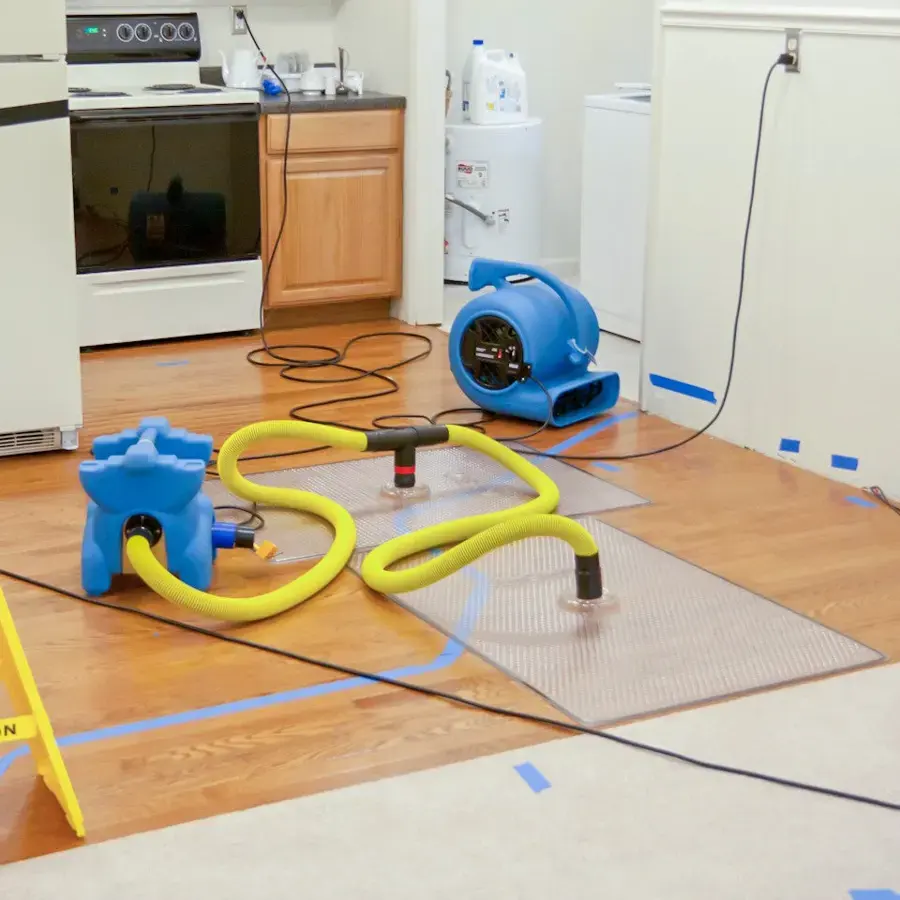
First steps for structural drying and dehumidification in Santa Ana
- 1
Stop the water
Shut off the source and have the standing water removed before drying begins.
- 2
Open the windows only if told
Outdoor air can help or hurt, so let the crew decide how to ventilate.
- 3
Leave equipment running
Machines should stay on until the crew confirms readings, even if the room feels dry.
- 4
Keep the log
Save the daily readings, since they document the drying for the claim.
What does structural drying and dehumidification cost in Santa Ana, CA?
Expect about $1,200 to $9,000 for structural drying in Santa Ana, CA, set by the drying class, how many rooms need equipment and whether hardwood, plaster or concrete is involved.
Light loss, one area
$1,200 to $3,000
- Fans placed
- Dehumidifier running
- Daily readings
Several rooms or hardwood
$3,000 to $6,000
- Mat system
- Wall cavities dried
- Moisture mapping
Dense or deep materials
$6,000 to $9,000
- Desiccant machines
- Long monitoring
- Full claim records
Ranges are typical, not a quote: category of water, square footage, material class and how fast drying started move the number most. Run the water damage cost calculator for a closer range.
How structural drying and dehumidification is handled in Santa Ana
The tech who does the walkthrough maps moisture before any equipment goes down, so the drying plan matches what is actually wet. Equipment stays until the readings say dry, not until it looks dry.
- 1
Map the moisture
Readings from moisture meters and infrared imaging mark each wet surface before equipment is placed.
- 2
Set the equipment
Drying fans and dehumidifiers go in by room size and the class of loss.
- 3
Check every day
Readings show progress, and equipment is moved or added when a spot lags.
- 4
Release at dry
Equipment leaves only when readings match a dry reference.
Why a dry surface is not a dry structure
Water soaks into studs, plates, subfloors and plaster, then moves back out slowly. A floor that feels dry can still read wet beneath, which is why readings direct the work and touch does not.
- Wood framing and subfloors hold water inside the grain.
- Plaster and concrete release moisture slowly.
- Hardwood cups and buckles if dried too fast or too slowly.
What each machine does
Air movers drive dry air over wet surfaces. LGR dehumidifiers pull that moisture out of the air so it does not settle elsewhere, and desiccant units take over for dense materials and low humidity conditions. Equipment is relocated as areas dry, so each machine works where moisture remains.
Daily monitoring
Readings are taken every day, equipment is moved to where moisture remains and the goal is a match with a dry reference. If a material is not drying, the crew changes the plan instead of waiting. See water extraction and the main structural drying page.
Structural drying and dehumidification across Santa Ana and nearby towns
Structural drying covers ZIPs 92705 and 92706, from Floral Park, Historic French Park and Heninger Park to Meredith Parkwood, Morrison Park, Mid-City and Wilshire Square.
The same service nearby: structural drying and dehumidification in Newport Beach, Fountain Valley, Costa Mesa.
Related water damage services in Santa Ana
Structural Drying and Dehumidification questions in Santa Ana, CA
Still damp?
Active water in Santa Ana is treated as urgent at any hour.
(888) 450-9281Santa Ana structural drying dispatchHow do you know the structure is dry?
Moisture meters read the materials and the readings are compared with a dry reference, an unaffected area of the same material.
What is the usual drying time?
Expect about three to seven days, with dense materials like hardwood and plaster at the long end.
Why are the machines so loud?
Drying fans and dehumidifiers move a lot of air. The noise is the equipment doing the work, and it ends when readings clear.
Can drying start before the leak is fixed?
Not usefully. A live leak keeps adding water, so the source must be stopped first.
Will the electric bill rise?
Equipment draws power for several days. Keep the log, since the extra use can be part of the claim.
What is a dry reference?
It is a reading from an unaffected area of the same material, the target the wet areas must reach.
Walls or floors still reading wet?
A crew maps the moisture, places the equipment and checks readings every day until the structure matches a dry reference.
(888) 450-9281Request Santa Ana structural drying- Active water treated as urgent
- Dried to the IICRC S500 standard
- Daily readings for the claim file