Structural Drying and Dehumidification in Costa Mesa, CA
Standing water is gone, but moisture stays in framing and subfloors. The Costa Mesa crew dries them with air movers and dehumidifiers until readings match a dry reference.
(888) 450-9281Start Costa Mesa structural drying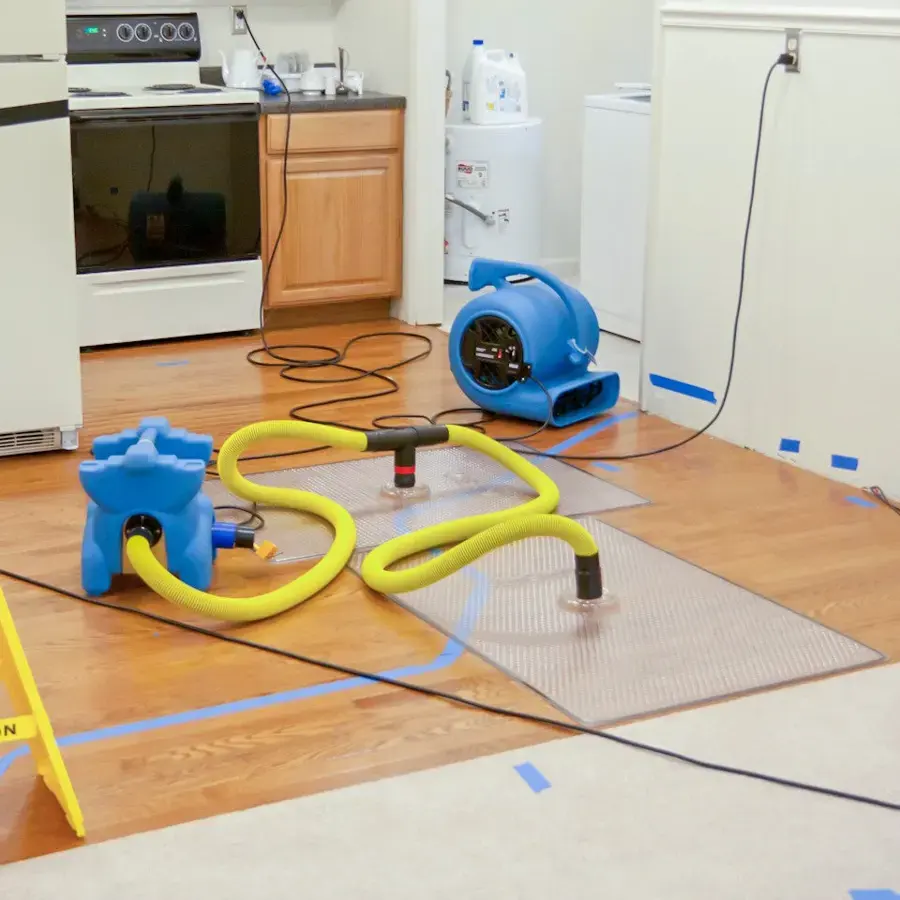
First steps for structural drying and dehumidification in Costa Mesa
- 1
Keep the equipment running
Leave the machines on. They run nonstop until the readings clear, even when the room feels dry.
- 2
Close the doors
Keep wet rooms closed so the dehumidifiers work on the right air.
- 3
Leave the setup alone
Moving an air mover changes the drying pattern and can leave a wet spot behind.
- 4
Keep the daily log
Hold on to the readings the tech leaves. They support the claim.
What does structural drying and dehumidification cost in Costa Mesa, CA?
In Costa Mesa, CA, structural drying typically runs $1,200 to $9,000, depending on the class of loss, the materials involved and how many days it takes to reach the dry goal.
Class 1 or 2, one area
$1,200 to $3,000
- Air movers and LGR unit
- Daily readings
- Drying log
Several rooms or hardwood
$3,000 to $6,000
- Drying mats
- Wall cavity drying
- Moisture map
Class 4, slab or plaster
$6,000 to $9,000
- Desiccant drying
- Extended monitoring
- Claim paperwork
Ranges are typical, not a quote: category of water, square footage, material class and how fast drying started move the number most. Run the water damage cost calculator for a closer range.
How structural drying and dehumidification is handled in Costa Mesa
The tech who does the walkthrough maps moisture before any equipment goes down, so the drying plan matches what is actually wet. Equipment stays until the readings say dry, not until it looks dry.
- 1
Map the moisture
Meters and a thermal camera find every wet area, including hidden cavities.
- 2
Set the equipment
Air movers and dehumidifiers go in, matched to each room's load.
- 3
Monitor daily
Readings are logged each day and the equipment is adjusted.
- 4
Verify dry
The machines leave only when readings match the dry reference.
What structural drying involves
After extraction, the crew sets air movers to push dry air across wet surfaces and LGR dehumidifiers to collect the vapor. Dense materials such as concrete and plaster can need desiccant units.
- Air movers matched to each room's evaporation load.
- LGR dehumidifiers for most residential losses.
- Desiccant units for dense, slow-drying materials.
- Drying mats and injection systems for floors and walls.
Why readings matter
A wall can look dry while the framing behind it is wet. The tech logs temperature, humidity and moisture readings every day and compares them with a dry reference, so the equipment stays until the numbers say it can go.
Costa Mesa homes dry differently. A postwar single-family home with open framing behaves nothing like a shared-wall condo, and the drying plan follows the building.
When it is finished
The equipment comes out only when materials fall within 2 to 4 points of the dry reference. The daily log and photos then go to you and the adjuster. See water extraction for the step before drying. The main drying page covers the same work in Newport Beach.
Structural drying and dehumidification across Costa Mesa and nearby towns
The Costa Mesa structural drying crew covers ZIPs 92626, 92627 and 92628, including the Eastside, Mesa Verde, College Park, the Westside and South Coast Metro.
The same service nearby: structural drying and dehumidification in Newport Beach, Fountain Valley, Santa Ana.
Related water damage services in Costa Mesa
Structural Drying and Dehumidification questions in Costa Mesa, CA
Walls still damp?
Active water in Costa Mesa is treated as urgent at any hour.
(888) 450-9281Costa Mesa drying help, 24/7How long does structural drying take?
Three to seven days is typical. Concrete, hardwood and plaster take longer, and readings decide the finish.
Why does the equipment run for days?
Moisture inside framing and subfloors leaves slowly, so the crew runs the machines until the numbers say the structure is dry.
Are the machines loud?
They hum and blow, but they run only in the wet rooms. Closing the doors keeps the noise to those rooms.
Does drying raise the power bill?
It adds to it for a few days, because the equipment runs nonstop. Ask the crew about the load before setup.
Do I have to move out while it dries?
Usually not. Most households stay, and the wet rooms are the only ones that become warm and noisy.
What does S500 mean?
IICRC S500 is the industry standard for water damage restoration. It covers inspection, extraction, drying and proof by readings.
Need a dry-out in Costa Mesa? Call now.
The crew dries framing and floors until readings prove it.
(888) 450-9281Call for Costa Mesa structural drying- Active water treated as urgent
- Dried to the IICRC S500 standard
- Daily readings for the claim file